Nobody planned to invent a pain relief technology. A weapon of war accidentally did it.
During World War II, naval physicians noticed something strange: sailors who survived nearby underwater explosions often showed internal tissue damage with no visible wounds on the surface. No bruising. No lacerations. Just injury, hidden and deep. That observation sat in medical literature for years before anyone figured out how to use it. Then engineers, physicists, and urologists in Cold War-era Germany decided to find out exactly what acoustic pressure waves could do to biological tissue, and what followed quietly reshaped how clinicians approach chronic pain, tendon problems, and soft-tissue injuries around the world.
If you’ve ever wondered why a technology that treats stubborn heel pain shares its physics with wartime explosions, the answer is a genuinely strange journey worth tracing.
The German Engineering Program That Started It All
The formal research began in 1969, funded by the German Ministry of Defense. Dornier, the aerospace manufacturer best known for aircraft, was commissioned to study what shock waves actually do when they hit human tissue. Their goal was defensive, not therapeutic. They wanted to understand blast injuries, not treat tendons.
That changed fast. In 1971, Haeusler and Kiefer reported the first in-vitro disintegration of a kidney stone using shockwaves without any direct contact with the stone. That was the pivot point. If a focused acoustic pulse could shatter calcified deposits inside the body without cutting into it, the implications for surgery were enormous. In 1974, physicists at the Dornier Institute demonstrated the successful disintegration of kidney stones, and the German Department of Research and Science backed a dedicated research program that brought together engineers, scholars, and top urologists to develop the approach.
By February 1980, the first human patient received shockwave treatment for a kidney stone in Munich. No incision. No general anesthesia. The stone was gone. That result, published in peer-reviewed journals and replicated across Europe, launched what would become a decades-long expansion of the technology far beyond urology.
“Extracorporeal shock waves have been introduced to medical therapy approximately 40 years since its first treatment for kidney stones as a noninvasive method.” – Zhang et al., Peking University, in a 2021 bibliometric analysis of global shockwave research published in BioMed Research International via PubMed Central.
The Three Pivots That Brought Shockwaves to Soft Tissue
Most technologies stay in the lane they were invented for. Shockwave therapy is a rare exception. It made three clean pivots over roughly four decades, each one expanding its clinical footprint.
| Era | Primary Use | Key Development |
|---|---|---|
| 1940s to 1950s | Observation only | WWII naval blast injury research; no therapeutic application yet |
| 1969 to 1980 | Urology / Lithotripsy | Dornier program; first human kidney stone treatment in Munich, 1980 |
| Early 1990s onward | Orthopedics and soft tissue | First orthopedic shockwave device (OssaTron) cleared for clinical use in 1993 |
The third pivot is the one that matters most for modern clinical practice. Orthopedic researchers in Germany and Bulgaria started testing whether the same acoustic energy used on kidney stones could do useful work on bone and tendon pathology. It could. In 1993, a specialized orthopedic shock wave device, OssaTron, with a free-moveable therapy head became available. Around that time, the first reports on shock wave therapy for calcific tendinitis were published, with subsequent investigations showing success rates between 70% and 80% for epicondylitis and heel spur treatment. That data, from the International Society for Medical Shockwave Treatment (ISMST), helped accelerate adoption in physical therapy and chiropractic settings through the late 1990s and into the 2000s.
How Research Volume Reflects Clinical Acceptance
One way to track how seriously a medical community takes a technology is to count how many research teams are studying it. For shockwave therapy, that number grew sharply and steadily. A 2021 bibliometric study published by researchers at Peking University People’s Hospital, analyzing global shockwave publications from 1990 to 2019, confirmed that publications on shockwave therapy showed consistent growth over the entire period. The full analysis, published in BioMed Research International via PubMed Central (2021), mapped research contributions across dozens of countries, with Germany, the United States, and Taiwan generating the largest share of output. That kind of sustained, broad-based academic interest doesn’t happen around a technology that doesn’t work.
The expansion into musculoskeletal care is particularly well-documented. Extracorporeal shock waves have been used for pain treatment across various sub-acute and chronic musculoskeletal problems since at least 2000. Two decades of clinical use across tendinopathies, plantar conditions, and calcific disorders have produced a body of evidence that, while still growing, is substantial enough to support widespread adoption outside hospital settings.
Focused vs. Radial: The Split That Defines Modern Devices
Here’s something most people don’t know: “shockwave therapy” is actually two distinct technologies that share a name and a mechanism but differ in how they deliver energy.
Focused shockwave concentrates high-energy acoustic pulses at a specific depth inside tissue. It targets a precise point, which makes it useful for conditions seated deeper in the body. The original lithotripsy machines were focused devices, and modern orthopedic versions are direct descendants of that engineering lineage.
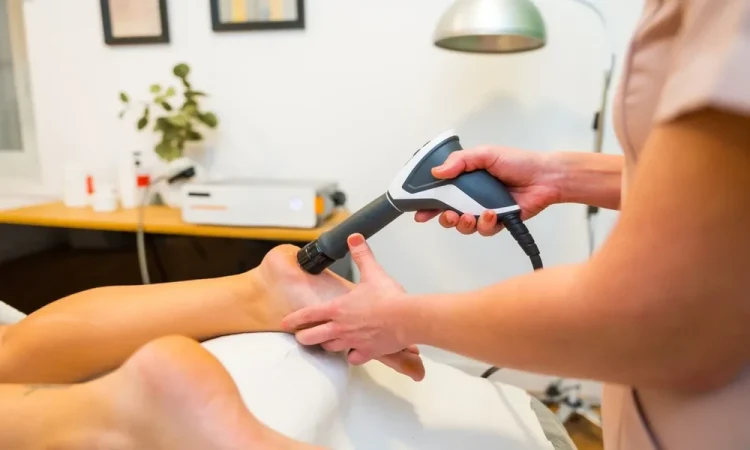
Radial shockwave disperses energy outward from the applicator tip in a radial pattern, affecting a broader, shallower area. This format is generally better suited for surface-level soft tissue conditions and is easier to operate across a wider range of clinical settings.
The practical implication: a provider that offers both formats can match the device to the specific depth and character of the problem, rather than applying a single protocol to everything. That flexibility is a meaningful clinical advantage, and it’s exactly the kind of capability that has driven adoption in dedicated practices. A provider offering Whitefish, MT shockwave therapy that carries both focused and radial options is drawing on nearly 55 years of accumulated engineering development to serve patients who might otherwise face surgical consultations for stubborn tendon problems.
What the Next Phase Looks Like
The research trajectory points toward more precise targeting, not fundamental redesign. Although ESWT is not currently considered a first-line gold standard for every application, newer models are emerging, and with the application of new technologies and artificial intelligence, the technique is positioned to grow as a viable option alongside other treatment modalities. AI-assisted dosing protocols, real-time imaging guidance, and tissue-specific energy calibration are all active areas of investigation.
The history of shockwave therapy is, at its core, a story about curiosity running ahead of intention. Nobody sat down in 1944 to design a non-surgical solution for plantar fasciitis. Naval medics noticed something strange, engineers took it into the lab, physicists aimed it at kidney stones, and orthopedic researchers eventually figured out what it could do for tendons. That full chain took about 50 years. The result is a technology with a clear mechanistic basis, a growing evidence base, and an expanding role in outpatient care that shows no sign of slowing.
The next time you hear “shockwave therapy” and picture something futuristic, remember: the physics were discovered in the wreckage of a world war. The science just needed time to catch up with the observation.
If you’re curious about what current shockwave research covers and how broad the evidence base has become, the PubMed Central archive of ESWL clinical history, published in 2023, is a solid starting point for understanding how deeply the field has evolved from its urological roots. And for the orthopedic side of the story, the ISMST’s official shockwave history timeline, which includes the 70% to 80% success rates reported for early heel spur and epicondylitis treatment in the 1990s, gives you the clinical milestones that shaped what’s available in clinics today.