
Crown Cut vs Rift Cut Veneer: Choosing the Right Grain for Your Interior Style

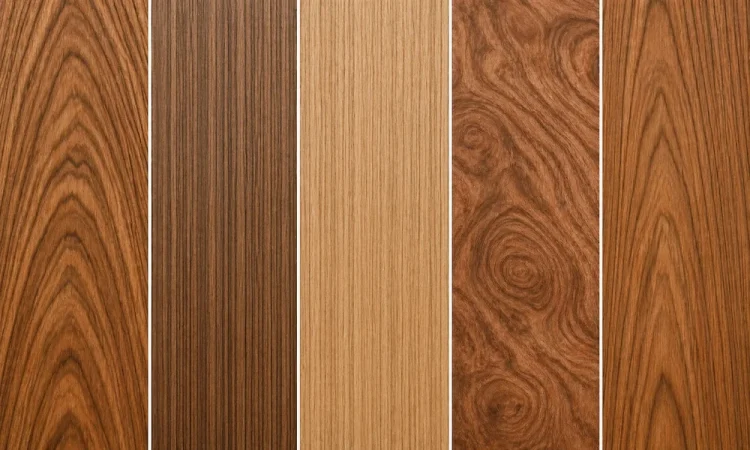
Veneers allow you to enjoy the natural look of timber in your furniture, wall panels, cabinets, doors, and other elements of interior design . However, the influence of the species used is also very important. The way a log is cut also creates great influence on how the veneer looks. In this regard, it is important to mention two types of cuts – crown cutting and rift cutting, which differ significantly from one another. Knowing the differences will help you choose the right style of veneers.
Understanding Crown Cut Veneer
Crown cutting is a technique which results in broad and sweeping grains. Its most striking feature is the shape that resembles cathedrals. The pattern makes the furniture look really expressive.
The rich grain will fit into those interiors when the wood should be a prominent detail of the décor. Depending on the wood used and its finish, the patterns can match traditional, transitional, modernist and warm minimalism styles.
Exploring Rift Cut Veneer
Rift cutting provides a straighter grain. This technique is often used in cases when designers want a cleaner look of wood. A rift cut veneer design can fit into contemporary and minimalist design schemes that are characterised by the need for consistency and simplicity in appearance, and the veneer grain style selection being rather straight can be implemented in design projects requiring a controlled look.
Crown Cut vs Rift Cut: Main Differences
The primary distinguishing feature of the two types of cut veneers relates to the appearance of the wood grain. Crown cut veneers are characterised by wider and flowing patterns, while rift cut veneer design offers straight and uniform lines of the grain.
The use of crown-cut veneers will add motion and variability to a space, while a rift-cut finish can make a room more structured and modern. One type of veneer cannot be described as universally better. The final choice depends on the required style, purpose, and characteristics of the surrounding materials.
Selecting the Right Veneer for the Interior Design Project
While selecting between crown cut and rift cut veneers, it is necessary to consider the size of a surface to be decorated with the cut veneer, existing furniture items, lighting, colours, and general design style of the interior. Crown cut veneers create a strong visual impact for wardrobe design systems, accent walls, and furniture items . Rift-cutt veneer is more suitable for cabinetry, minimalistic types of furniture, and interiors based on subtle texture.
The direction of the installation is also essential, as vertical and horizontal installation of the veneer will create two different perceptions of a room.
Harmonising the Veneer with Other Materials
While using wood veneer, it is better to select the grain of the veneer in such a way that the veneer complements other finishes. Natural stones, metals, glass, laminates, fabrics, and painted surfaces can be successfully combined with wood veneer provided that such materials are harmonised in terms of colours and textures.
Royale Touche has several surface solutions suitable for various interior designs. By applying the grain of the veneer to match other materials, the design will be more harmonious.
Conclusion
Both types of veneer have their own specific applications. Crown-cut wood veneer has excellent flowing grain patterns, while the grain of rift-cut wood is exactly opposite. The choice where you get types of veneer sheets depends on a number of conditions, including the style of a project, intended purposes, room proportion, and other materials.